The Poison Arrow
Updated: Jan 22
You know, they say, "No press is bad press" but dang did this whole event really throw me for a loop. It Irked me to feel like I needed to defend injustice to a predominantly liberal educated population, I thought I knew my town, and my fellow musicians, but dang was I wrong. As we approach the third anniversary of my local press saga, original letter from the public can be found HERE , and my reply HERE.
Though entirely in jest, my Grandpa still lovingly calls me "The Poison Arrow" when I do anything of dramatic interest. So at least I got a nickname out of it, and one hell of a Letter to the Editor. As we muster through another year of this presidency please continue to challenge your community and yourself to reflect and assess, remind each other that old habits die hard, and your standard (outdated) routine may no longer work for modern times.
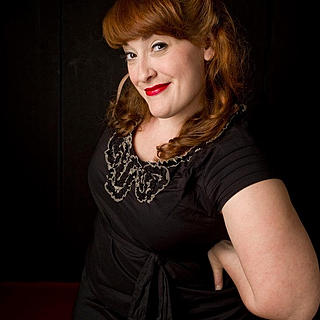
My name is Zara Bode, and I’m the parent Dan DeWalt so lovingly referred to as the sender of a “poison arrow” in his letter to the editor last month. It’s interesting when a man writes such an impassioned declaration about someone and wasn’t even present at the time of the event. DeWalt was set to be this kid’s accompanist, but instead was paid, sent home and then wrote a letter speculating what kind of person would shut down a song about anti-lynching. And while I am nothing close to the person he described — which was something along the lines of a spineless unimaginative Floridian — it’s still me. Yup. I was the mom that said “No” to “Strange Fruit” being sung at the Windham County talent show.
When presented with the concept of pre-emptive censorship, you might say, “How can we judge something that didn’t happen?” But it did. It happened at soundcheck, and for me, that was enough. This could be a letter defending my character, my artistry, my place in this community as one of very few non-Black people of color here in Brattleboro, but instead, I want to address the basic concepts of impudence and damage control. It’s clear this community holds itself in very high regard when it comes to ticking liberal bullet points, but what I saw that day was a blatant example of racial insensitivity.
For those who are not familiar with Brattleboro and the Latchis, picture a beautiful old theater hall. The stage is raised, giving an air of prominence as you sit in the seats in the audience below. At this particular show, front and center is an enormous aerial circus rig. You can’t miss it. It’s wrapped in black, so it doesn’t take up much visual space, but it is large and cumbersome and every person entering the stage is steering around it, tripping on wires, holding onto the bars as they set up and strike for each contestant’s performance. It’s a fairly familiar sight in Brattleboro, with our vibrant circus community, and I thought little of it, but from this rig hangs one — single — thick — white — rope. Do you get where I’m going with this story?
A young child enters the stage. It’s overheard that the piano player won’t be making it to sound check, nor do they want to move the piano from the side stage, but the singer is asked to check the levels regardless. They approach the mic and apprehensively sing one of the most haunting pieces of lyrical poetry:
Southern trees bear strange fruit.
Blood on the leaves and blood at the root.
Black bodies swinging in the Southern breeze.
Strange fruit hanging from the poplar trees.
Pastoral scene of the gallant South.
The bulging eyes and the twisted mouth.
Scent of Magnolias, sweet and fresh.
Then the sudden smell of burning flesh …
My jaw dropped. My heart sank. Was it not general knowledge that we “look but don’t touch” this iconic song? That was besides the point. My brain went straight to the worst-case scenario: There is a light-skinned child singing in front of a noose. This is going to be televised and livestreamed and go viral. How do I protect my town, this institution and that little kid’s reputation?
Was the rope intentional? Of course not, but context is crucial when dealing with a song of this weight. How does something so huge on that stage become an oversight? I have no doubt that the student did their homework, but sharing this song during a civil rights unit at school amid other presentations in a safe learning environment is different. This was a publicity disaster waiting to happen.
I did not confront the performer or the parent. I went directly to the various heads of the event. Never once did I raise my voice, or speak to anyone in a disrespectful tone. In fact, at first I froze, and sheepishly sent an email to ask the producers if the songs had been vetted. The answer was “No.” One even asked me if I knew who Billie Holiday was. This is when I got scared and hit record on my voice memos app. Something told me to brace myself for disappointment. With tears in my eyes I asked that the song be reconsidered. With music and theater being my expertise, I knew I could offer guidance, coaching, a backup selection; anything to keep this from happening. The producers convened, and I was confronted by several authorities, all of whom said: There was nothing wrong with the song, that I was out of line, that people like me who censor art and are frightened by the imagery are the issue, and the show would go on as planned.
What about the rope? I did not fight it.
As a mom, I didn’t want to crush anyone’s dreams, so I hid in a bathroom stall and cried.
It wasn’t until showtime that the song was officially cut from the show. In the end, the performer made the decision. And while my heart still aches as I write this reply, I have no remorse.
Believe it or not, the rest of the night went without a hitch. You want to know why? Because kids are awesome. They bring hope. And I know we want to protect their egos at all costs, because little can compare to the optimism we feel when they share their talents and gifts from their wide-open hearts, but it’s still our job to guide them and learn with them. Children are ever-evolving little sponges, and are incredibly resilient, while we adults on the other hand are the ones that tend to hold and breed resentment. It’s elders who think our way is the only way, and let our pride inspire us to write letters not based on firsthand events. What I experienced that day was a bunch of prominent leaders in Brattleboro getting very defensive, and a child who heard constructive criticism, pivoted their performance and slayed their alternate piece. These are the types of children and performers we need to be raising, and the type of ally the civil rights movement needs.
We think just because we live in a liberal county and our hearts are in a good place, that we can do no wrong by speaking up, that everything progressive is our right to comment on, but sometimes you just gotta watch, and listen and reflect, because nine times out of 10, you’re likely missing something. The basic lack of awareness of what a rope signifies in American history proves we’re not as “ready” as we think we are.
Of course, I am tired of the complacency of this country, and I refuse to just watch from the sidelines, but even from this position, I recognize that we still have so much to learn about how to respect African American history. When our privilege edges into impudence is when we show our cards, and prove our weakness as allies in this modern civil rights movement. Let’s discuss creative freedoms, artistic censorship and whether or not it is appropriate for a child to use this song in this context, but these are conversations, not teachings. And right now, I still refuse to be told that a child has a “right” to sing “Strange Fruit,” and truly understands what that song is about, and when you think about it, let’s hope no child ever has to.
So we don’t let the song go unfinished, the rest of the lyrics are as such:
… Here is a fruit for the crows to pluck
For the rain to gather, for the wind to suck
For the sun to rot, for the tree to drop
Here is a strange and bitter crop.
Let it be known, I’m not afraid of these words. I’m afraid of living somewhere that thinks it’s above self-examination and reflection.
- - - - - - -
Zara Bode is a composer, musician and vocalist, and part of the artistic community in New England. She is originally from San Francisco, and built her career in New York City before moving to Brattleboro 10 years ago. The opinions expressed by columnists do not necessarily reflect the views of Vermont News & Media.


Comments